Adapted methods that work for kids and online sessions.
We use plain language, real techniques, and modalities backed by research. Here are the ones we lean on most.
PCIT
Parent-Child Interaction Therapy
A short-term approach for kids with behavior challenges. We coach parents in real time.
TF-CBT
Trauma-Focused CBT
Helps kids who've been through hard experiences feel safer and stronger.
Play
Play therapy
Built into our work with kids this age. Games, drawings, puppets — all clinical.
Coach
Parent coaching
A core part of how we help — not an extra.
School
School collaboration
With your permission, we can work with your child's teachers and counselors.
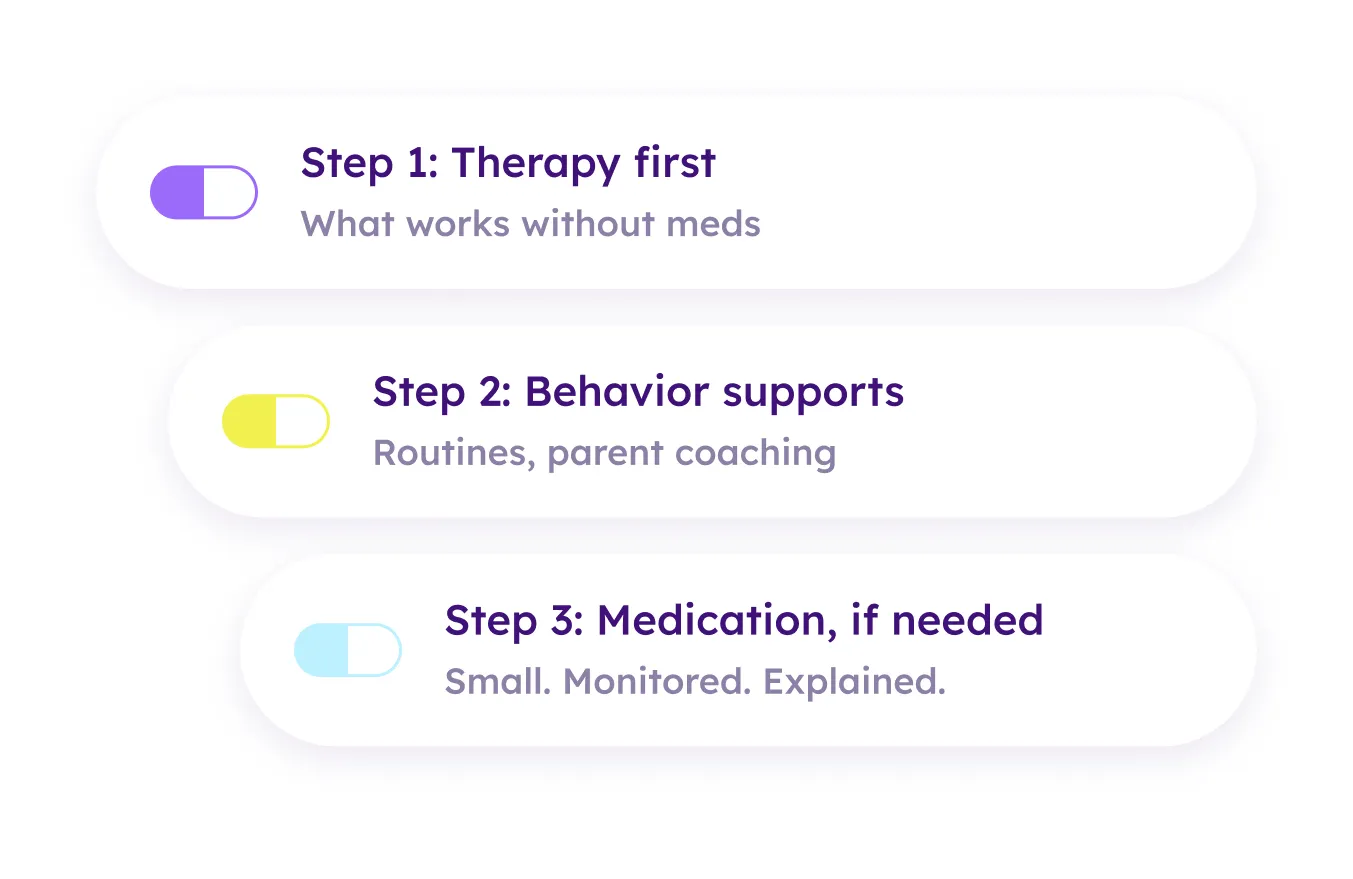
Psychiatry for little kids
Rarely the first answer. Never the only answer.
Our psychiatrists work carefully. We try therapy and behavior supports first. If medication does help, we explain everything, start small, monitor closely, and adjust as your child grows.
You're part of every decision.
Tips for your first session
Five small things that make a big difference.
01
The day before
Tell them then — not weeks before. Avoid the build-up.
02
Frame it kindly
"A special grown-up who helps kids with big feelings."
03
Comfort item
A stuffed animal, a blanket, whatever helps.
04
Low-key after
A walk, a snack, quiet time. No big plans.
05
Don't quiz
Let them share if they want. Silence is okay.
Ready when you are
Let's help your little one feel like themselves again.





.webp)
.webp)
.webp)


.svg)
.svg)